How to save water around the house to keep your garden alive during a hosepipe ban
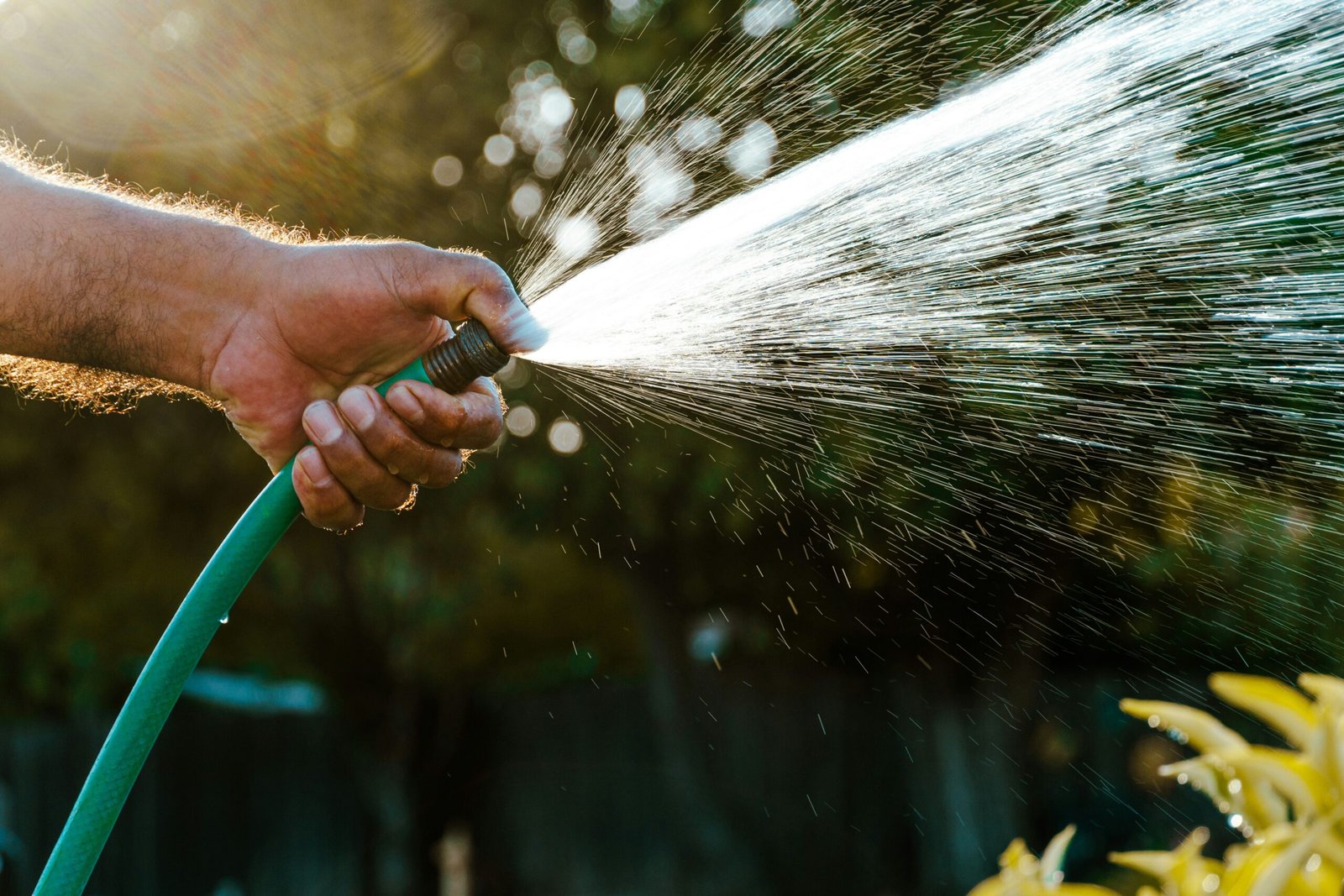
Although renowned for its rain and changeable weather, summers in the UK are increasingly becoming drier, and hosepipe bans more common. Hosepipe bans are restrictions that water companies are entitled to impose on customers within their supply area once reservoirs, rivers or groundwater levels drop low enough to threaten supply. They’re generally the first and mildest tool a water company reaches for when hot weather coincides with higher demand and they are intended to reduce non-essential use before things escalate. Hosepipe bans typically cover using a hosepipe to water the garden, wash the car, fill a paddling pool or top up a pond, and breaching one can result in a fine.
If your garden falls under one of these bans, the easy response is to assume that your garden or plants are a lost cause until restrictions lift, but that doesn’t need to be the case. A hosepipe ban might remove one source of water, but not every source!
Most households pour away considerably more usable water each day than they realise and so we explore various ways you can save household water to beat a hosepipe ban.
1. Save water that would otherwise run down the drain
Shower warm-up water
Most people need to run their shower for anywhere between ten and thirty seconds before it reaches the correct temperature. That’s a lot of water that would otherwise go straight down the drain.
By using a bucket or other receptacle to catch that first run of water, you can easily save several litres of water a day without making any changes to your routine. The trick is to keep a bucket somewhere easy to access so you will actually use it. If you have a small bathroom or a lack of storage, consider a collapsible bucket*, they fold down to almost nothing and are sturdy when expanded.
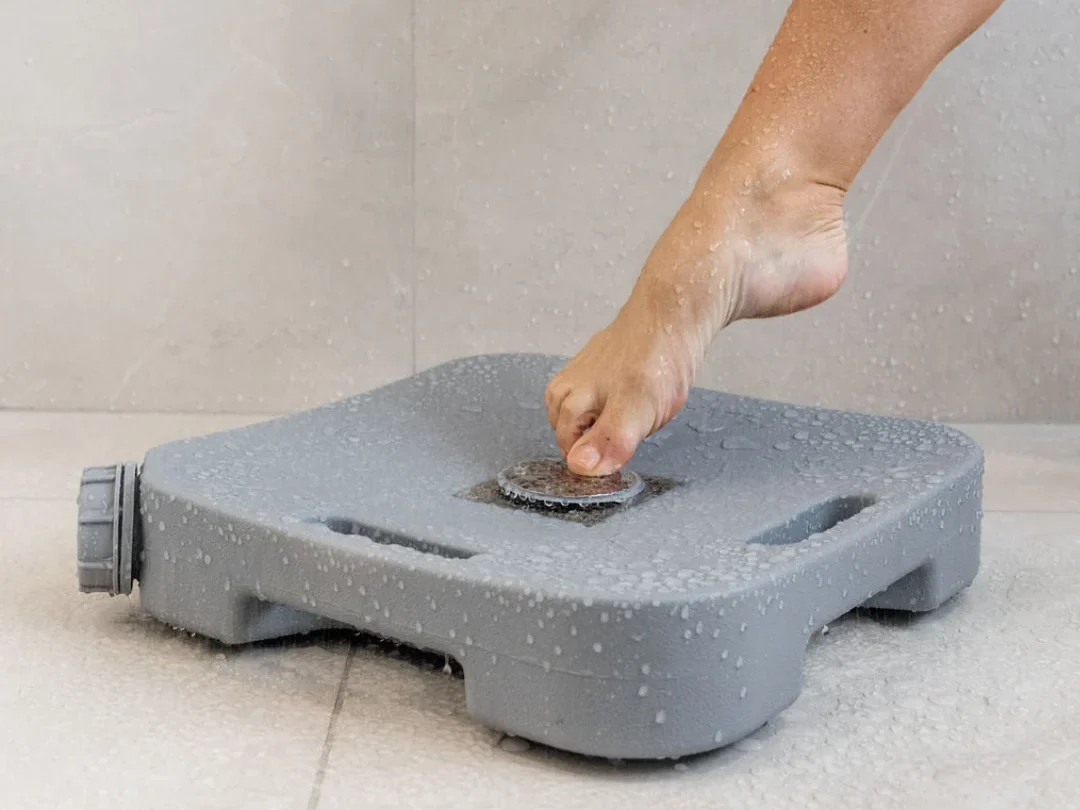
For a more chic alternative to a bucket, try the SEVAS, a neutral-toned water catcher that sits in the base of your shower, stands to one side when not in use and which comes with an attachable spout so you can take it straight outside after your shower and water your plants.
Softened water is the exception worth remembering: it tends to be higher in salts, which can damage soil structure over time, particularly in clay-heavy gardens, so it’s best left to go down the drain as usual.
Tap cool-down water
The same logic runs the other way at the kitchen tap. In warm weather, the water sitting in the length of pipe closest to the tap warms up, so the first stretch that runs before the water turns properly cold tends to go straight down the sink rather than into a glass. Keeping a jug or even a small plant watering can* on the side to catch it costs nothing in effort. Although it might seem like a small amount of water, across a few glasses of water a day per household, it adds up over the course of a ban.
Washing vegetables and cooking water
Washing vegetables and salad in a bowl rather than under a running tap works leaves water that’s perfectly fine for most garden plants once it’s been used.
You can also re-use water that’s been used to boil vegetables or pasta, provided that it’s cooled and hasn’t been heavily salted.
Dehumidifiers
If you are running a dehumidifier over the summer then you are sitting on another source of water that tends to get poured away without a second thought. Just tip it straight into a watering can.
Bathwater
A full bath holds a lot of water, more than most people think to bail out. You can scoop most of the water out with a bucket or bowl but for the dregs a simple syphon pump* makes the process easy and can direct the water straight into a watering can. The RHS recommends using bathwater within 24 hours unless it’s been through a reed bed or a properly designed filtration system, since water left standing longer starts to lose its usefulness and becomes unpleasant to handle.

Washing-up water
Water from washing up and from the kitchen more generally is also fair game. According to the RHS, soil and potting compost are reasonably effective at filtering out the soap and detergent residues this kind of water carries, and in modest amounts it can even act as a mild fertiliser. Anyone using greywater regularly rather than as an occasional top-up might also switch to an eco-friendly washing-up liquid, like Ecover*, which reduces the load on the soil further.
What to avoid
Greywater of any kind should never go near edible crops, given the risk of pathogen contamination from soap, food residue and general household use. Nor is it something to lean on indefinitely anything beyond casual, short-term reuse, is a job for expert advice.
2. Catch what falls for free
Water butts and diverters
Even during a prolonged dry spell, UK weather rarely goes long without producing at least some rain, and a water butt positioned under a downpipe will often fill faster than people expect once it does. A diverter kit, fitted into the downpipe between the roof and the drain, redirects water into the butt automatically and switches back once it’s full, so the whole system runs itself rather than requiring anyone to remember to move a hose around during a shower. Butts come in a wide range of sizes, and it’s worth matching capacity to the garden rather than defaulting to whatever’s cheapest: a small pot-and-border garden will get by comfortably on a single standard-sized butt, while anyone with beds, a vegetable patch and a lawn to think about may want two or three linked together.
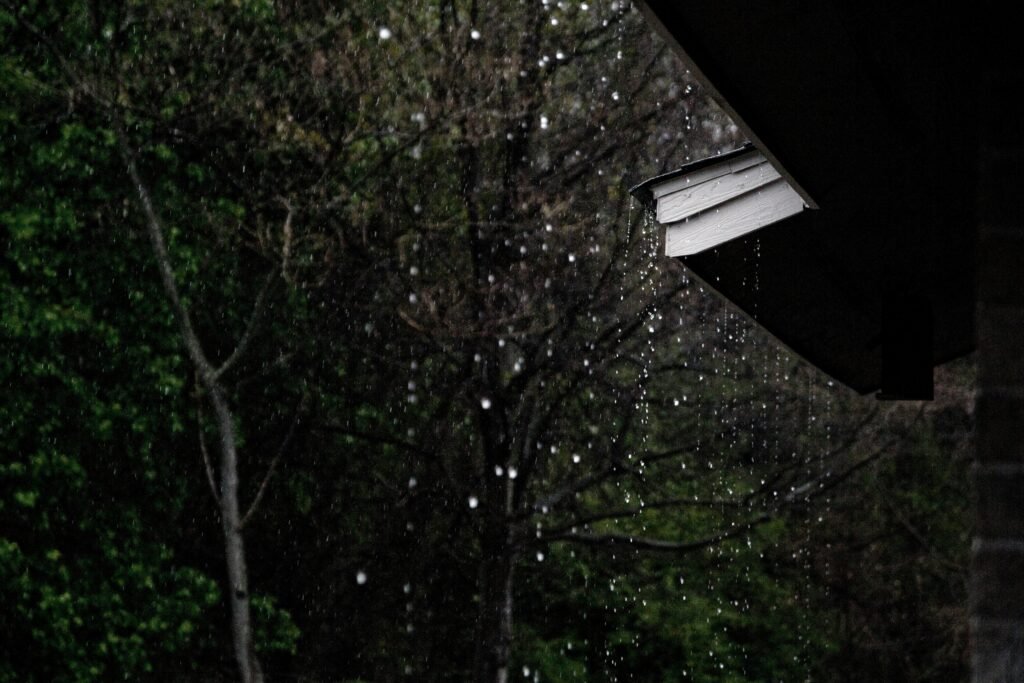
None of this works particularly well if the gutters are blocked. A build-up of leaves and moss reduces how much rainwater actually reaches the downpipe rather than overflowing uselessly onto the path, so a quick check and clear before the next spell of rain is one of the few genuinely free ways to increase how much water gets collected.
Keep an eye on the forecast
Keeping half an eye on the forecast makes the whole system more useful too, since an empty butt ahead of a downpour collects a good deal more than one that’s already full from the last one. It’s one of the more practical reasons to check a short-range rainfall forecast during a ban, alongside the more obvious business of deciding whether the garden needs watering at all that day.
3. Make stored water go further once it’s out there
Timing
Timing is everything. On a hot, still afternoon a significant proportion of water applied to open soil or foliage simply evaporates before it can do any good. Watering in the early morning or evening, rather than the middle of the day, means far less water is lost to evaporation before it ever reaches the roots.
Mulching
A layer of mulch, whether bark, compost or something similar, spread over beds and borders slows down how quickly the soil dries out once it’s been watered, meaning less saved water is needed to keep plants going in the first place. It’s groundwork that pays for itself several times over during a ban, since every watering lasts longer than it would on bare soil.
Watering at the root
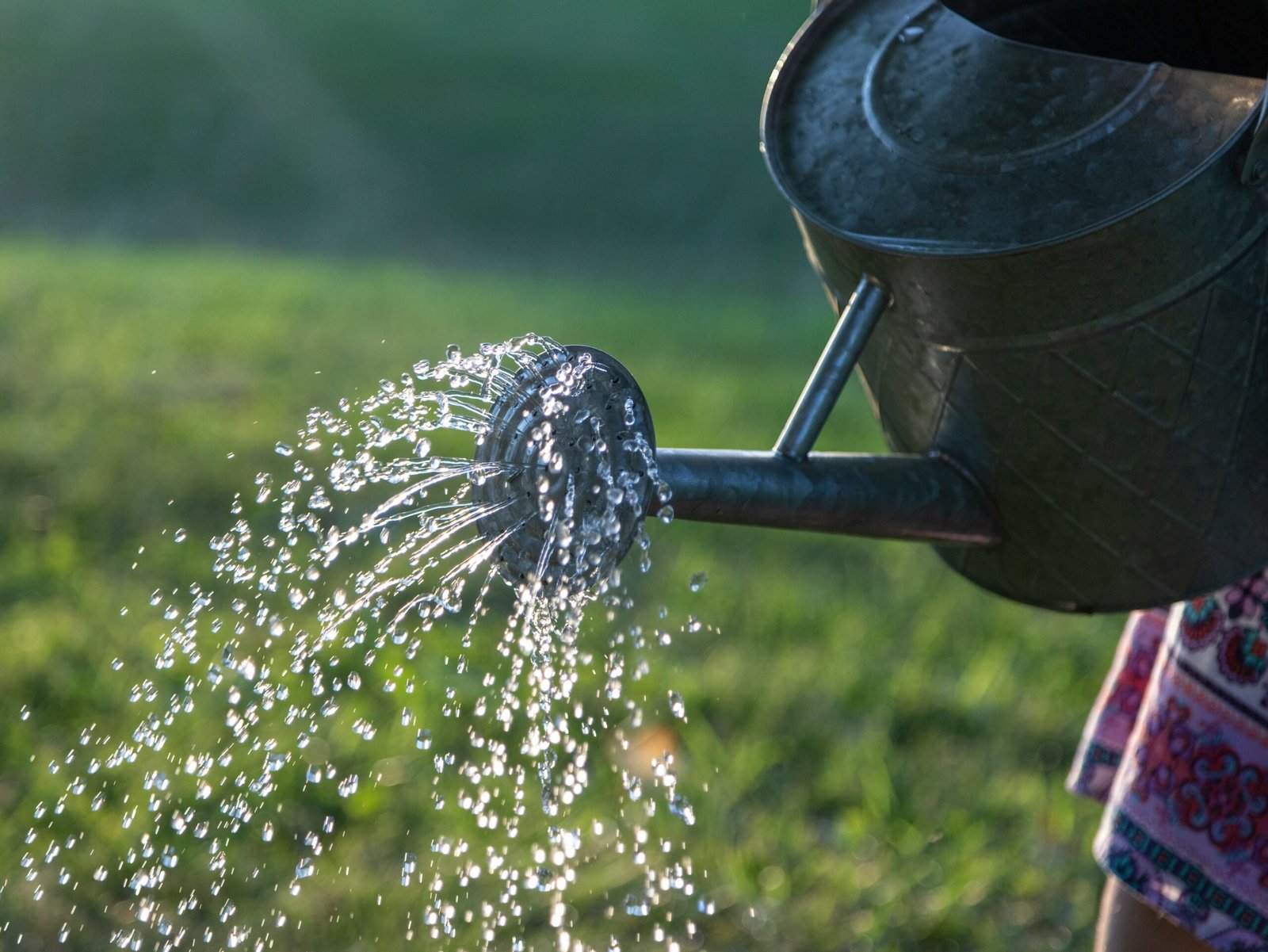
Where the water actually lands matters as much as how much of it there is. A watering can with a long spout, or a rose attachment fitted directly onto the can, makes it easier to get water to the base of a plant rather than sprinkling it across the leaves and surrounding soil, where a good deal of it never reaches the roots at all.
Prioritising what needs it most
Not every part of the garden deserves an equal share. New plantings, anything in a pot, and edible crops are the most vulnerable to a dry spell and should take priority, while an established lawn, however brown it looks, is usually dormant rather than dying and will generally recover once normal rainfall returns. Saved water spent on a lawn is often saved water that a more vulnerable plant could have used instead.
Conclusion
A hosepipe ban restricts one source of water, not every source, and by the time this one lifts, most households will have found several replacements without much effort at all. None of it needs to feel like a chore: a bucket or jug placed somewhere it’ll actually get used covers most of the easy wins indoors, and a water butt that’s once been set up under a diverter largely looks after itself outdoors. Worth checking whether your own area is currently under restrictions, and worth keeping an eye on the forecast in the meantime, since knowing when the next spell of rain is due is half of making good use of it.
If a link has an * by it, that means it is an affiliate link and therefore it helps Weather the weather stay free to use, as it is tracked to us. If you go through it, it can sometimes result in a payment or benefit to us. This does not impact the amount you pay.